01
Choose
Select the pilot profile and airline context that match the selection you are preparing for.
Airline interview preparation
Practise technical, HR and scenario-based pilot interview questions, strengthen how you structure your answers and identify weak areas before assessment day.
Technical HR Scenarios Airline-specific preparation
Explain how a change in angle of attack affects lift and the approach to a stall.
Why interview practice matters
ATPL exams often test whether you can identify the correct answer. An airline interview can require you to retrieve that knowledge, structure it clearly, explain your reasoning and respond when the interviewer goes deeper.
ClearATPL helps turn technical knowledge into interview-ready answers through repeated, structured practice.
Bring the relevant knowledge to mind.
Build a clear, logical answer.
Communicate the reasoning behind it.
Respond when the interviewer goes deeper or changes direction.
01 / How it works
A focused loop built around the Interview Simulator’s current profile, question and review flow.
Select the pilot profile and airline context that match the selection you are preparing for.
Practise typed answers to technical, HR and operational scenario questions in a 10-question interview-style session, with aircraft-knowledge questions when an aircraft is selected.
Explain the operational significance of V1 during take-off.
Review your session score, key strengths, areas to improve and the strongest and weakest parts of your answers.
Clear priorities and a concise operational explanation.
Add the technical reason behind the decision and close the answer clearly.
Use your session feedback to identify weak areas, revisit the knowledge that needs work and practise another structured session.
02 / Practise what you may be asked
Technical interviews
Refresh ATPL and aircraft knowledge, then practise turning technical concepts into concise, structured interview answers.
Read the technical interview guideExplain how wing contamination can affect stall behaviour and aircraft performance.
HR & behavioural interviews
Practise questions around motivation, teamwork, communication, decision-making and the professional experiences you can discuss clearly.
Tell me about a time you had to make a difficult decision with incomplete information.
Operational scenarios
Work through scenario-based questions that require prioritisation, judgement and clear communication rather than simple recall.
How would you respond if operational pressure conflicted with a developing safety concern?
03 / Refresh before you explain
Use ClearATPL’s revision tools to revisit the technical knowledge behind your answers before practising how to explain it.

Revisit the 13 EASA ATPL subjects with focused questions and explanations.
Review aircraft systems, limitations, procedures and operational concepts.
Prepare with systems and performance questions for supported aircraft types.
04 / Prepare with context
Where relevant material is available, choose a preparation profile so interview practice can be organised around the airline selection you are preparing for.
Airline names identify preparation profiles and are not an indication of endorsement or affiliation.
05 / Review the answer
Repeated interview practice is useful when you can see where an answer lacked technical depth, structure, completeness or clarity—and then revisit that area.
Clear priorities and a concise operational explanation.
Add the technical reason behind the decision and close the answer clearly.
Review the strongest part of the session and why it worked.
See which answer needs attention and a clearer way to approach it.
06 / Real preparation
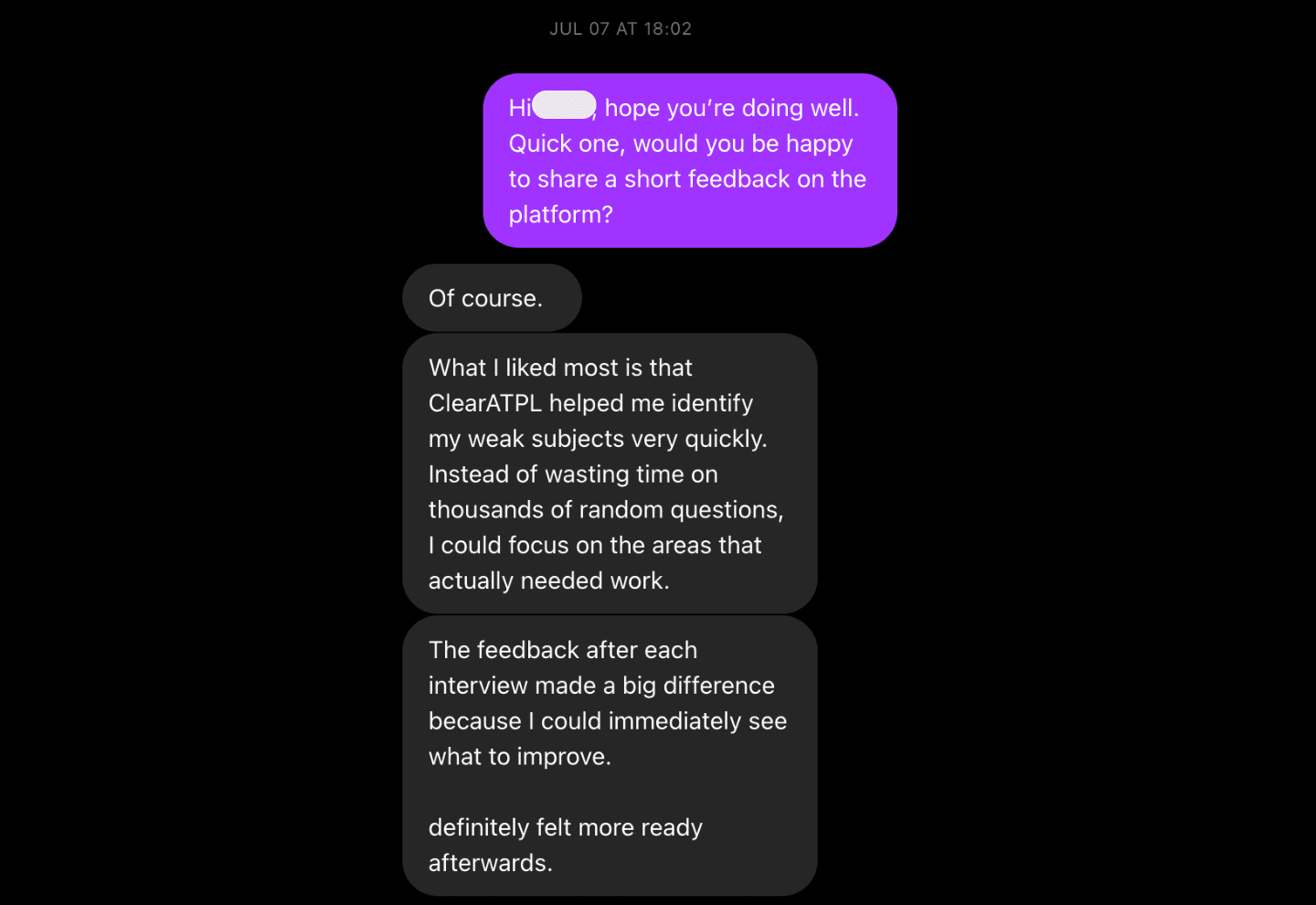
A small selection of privacy-redacted feedback already shared with ClearATPL.
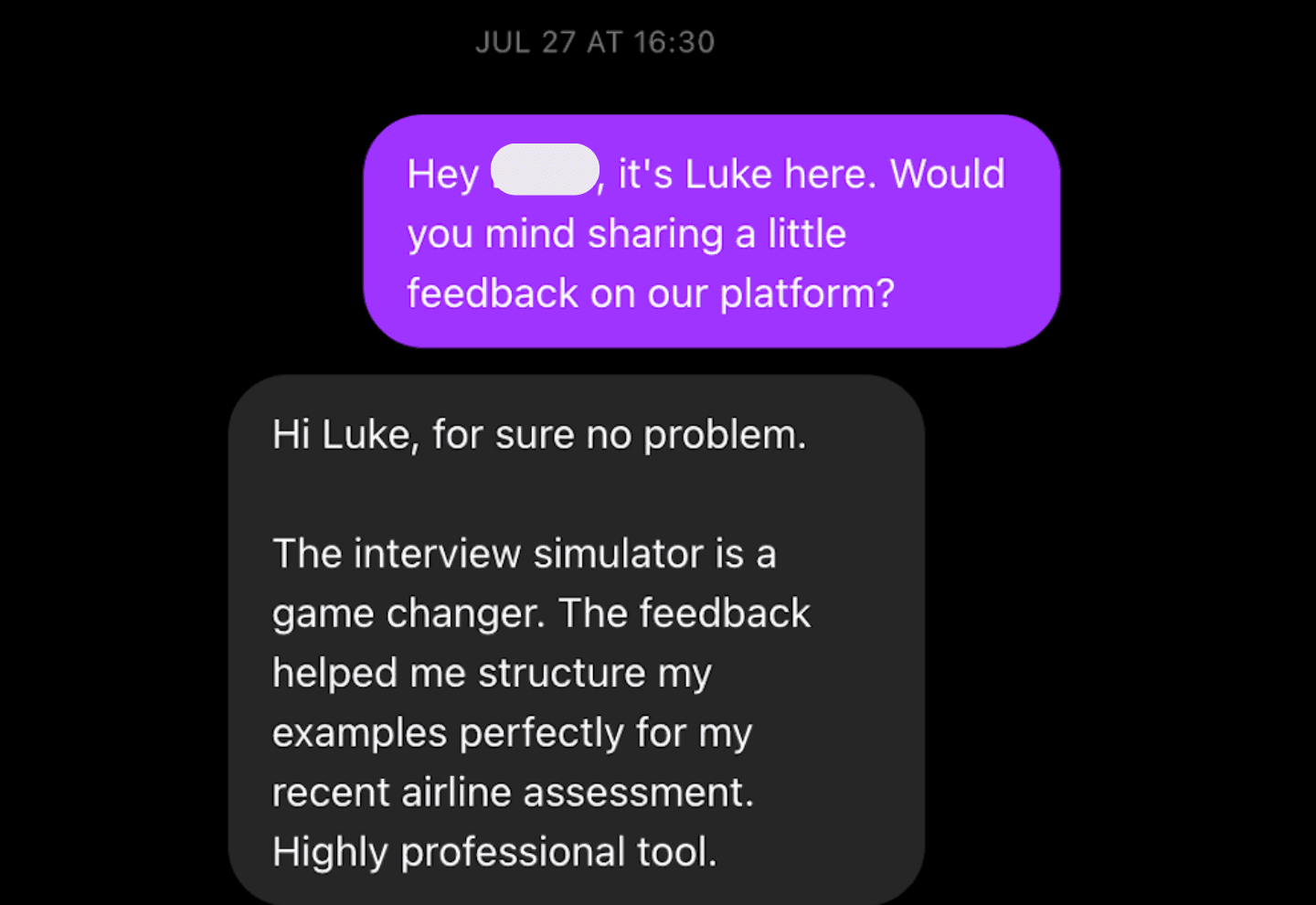
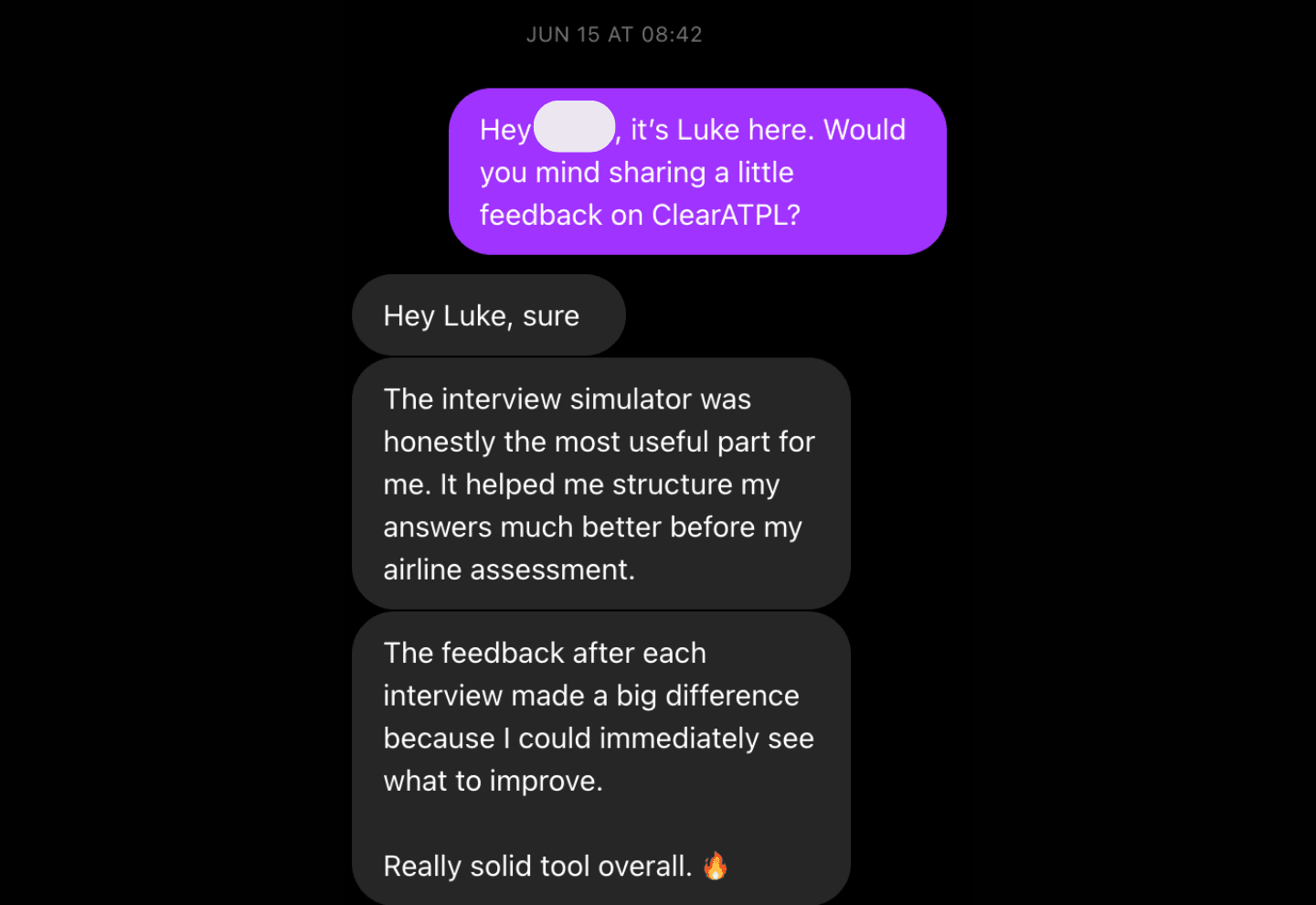
07 / Start free
Explore free guides and airline-preparation material before starting structured interview practice.
A practical guide to the stages, priorities and timing of interview preparation.
Review common technical themes and what a clear answer needs to communicate.
Understand how interview preparation fits into the wider airline-selection process.
Questions before you begin
Practical answers about technical, HR and airline-selection interview preparation.
Start with the airline’s published guidance and the requirements of the role. Refresh relevant ATPL and aircraft knowledge, prepare structured examples from your experience, then practise answering technical, HR and scenario questions aloud or in writing. Repeated practice helps you retrieve and explain knowledge under pressure rather than only recognise it on a page.
The mix varies by airline and role, but interviews can include technical ATPL or aircraft questions, motivation and competency questions, and operational scenarios. You may be asked to explain a concept, describe a past experience or reason through a decision. Always use the airline’s own assessment information as your primary guide.
Prioritise the technical subjects relevant to the role, your recent flying and any aircraft experience you declare. Core ATPL knowledge, performance, principles of flight, systems and operational decision-making are useful areas to revisit. Aim to explain concepts and their operational relevance, not only recite definitions.
A technical interview explores aviation knowledge and how you apply it. An HR or behavioural interview focuses on motivation, teamwork, communication, judgement and examples from your experience. Both require clear, well-structured answers, but the evidence you use is different.
Answer the question directly, organise the key points in a logical order and connect them to operational relevance where appropriate. For behavioural questions, a structure such as situation, task, action and result can help. Keep the answer concise enough that the interviewer can follow it and ask for more detail.
ClearATPL provides preparation profiles for selected airlines where relevant material is available. These profiles organise practice around the selection context; airline names do not indicate endorsement, affiliation or an official partnership.
No. ClearATPL provides independent preparation and practice material. It does not claim access to confidential airline question banks, and airline names identify preparation profiles rather than official airline content or affiliation.
Start early enough to identify weak areas and complete several focused practice sessions before the assessment. The right timeline depends on your current knowledge, experience, the role and the date of the interview, so work backwards from the airline’s instructions rather than relying on a last-minute review.
Build confidence through structured interview practice before assessment day.
Compare pricing